Lovable review
Lovable pricing explained: the free plan, how credits work and which plan suits a designer. Plus what Lovable does well and where it falls short.
 Sketch Focus Editorial TeamLast updated
Research-based reviewNot yet tested hands-on · facts checked Nov 22, 2026How we test
From $25/mo
Free plan available
Our take so far
Lovable looks like the most designer-friendly of the AI app builders we've researched: its point-and-edit toolbar, design questions and design systems on every paid plan suit people who think visually. The catch is cost: reviewers and G2 users say credits go fast, including on fixes, and Lovable's Terms say credits are spent even when the output is faulty.

Lovable
At a glance
Not scored yet. We only score tools after hands-on testing.
- What it is
- AI app builder with a visual editor
- Free plan
- Yes
- Paid from
- $25/mo
- Builds
- Web apps and websites
- Design import
- Figma plugin, Figma MCP, .fig
- Stack
- React with TanStack Start
- Backend
- Built in (Lovable Cloud) or Supabase
- Export
- Git sync on all plans, ZIP on paid
- Made by
- Lovable (Stockholm)
Lovable pricing
Free
For trying it out
$0/mo
- 5 credits a day, up to 30 a month
- Private projects, unlimited members
- Publish to lovable.app or 10 invitees
- No code editing or custom domain
Pro
For solo designers
$25/mo
- 100 credits a month + 5 a day
- Unused credits roll over
- Custom domains, no Lovable badge
- Code editing and design systems
Business
For teams and agencies
$50/mo
- Everything in Pro, 100 credits
- SSO and role-based access
- Design templates
- Security centre, priority support
Enterprise
For large organisations
Custom
- Audit logs and SCIM
- npm-package design systems
- EU inference, GitHub Enterprise
- Dedicated support
Usage is metered in one credit balance for building, hosting and AI features. Pro and Business come in bigger credit tiers, and yearly billing gives two months free. Prices from lovable.dev, checked Nov 22, 2026. Plans change often, so confirm before you buy.
What Lovable is
Lovable is the AI app builder that feels most like it was designed for people who don’t want to look at code. You describe an app or website in a chat, Lovable builds it, and you refine it either by talking to it or by clicking directly on the page. It is made by a company of the same name based in Stockholm.
Every project can use a built-in back end, Lovable Cloud, with a managed PostgreSQL database, sign-in and file storage, or you can connect your own Supabase. That means a designer can go from idea to a working app with real accounts and data without setting up anything outside Lovable. Building, chatting, hosting, the back end and AI features all draw on one credit balance.
What designers can do with it
Lovable’s strength is the editing loop after the first version, not just the first prompt. That’s where most AI builders fall short for designers.
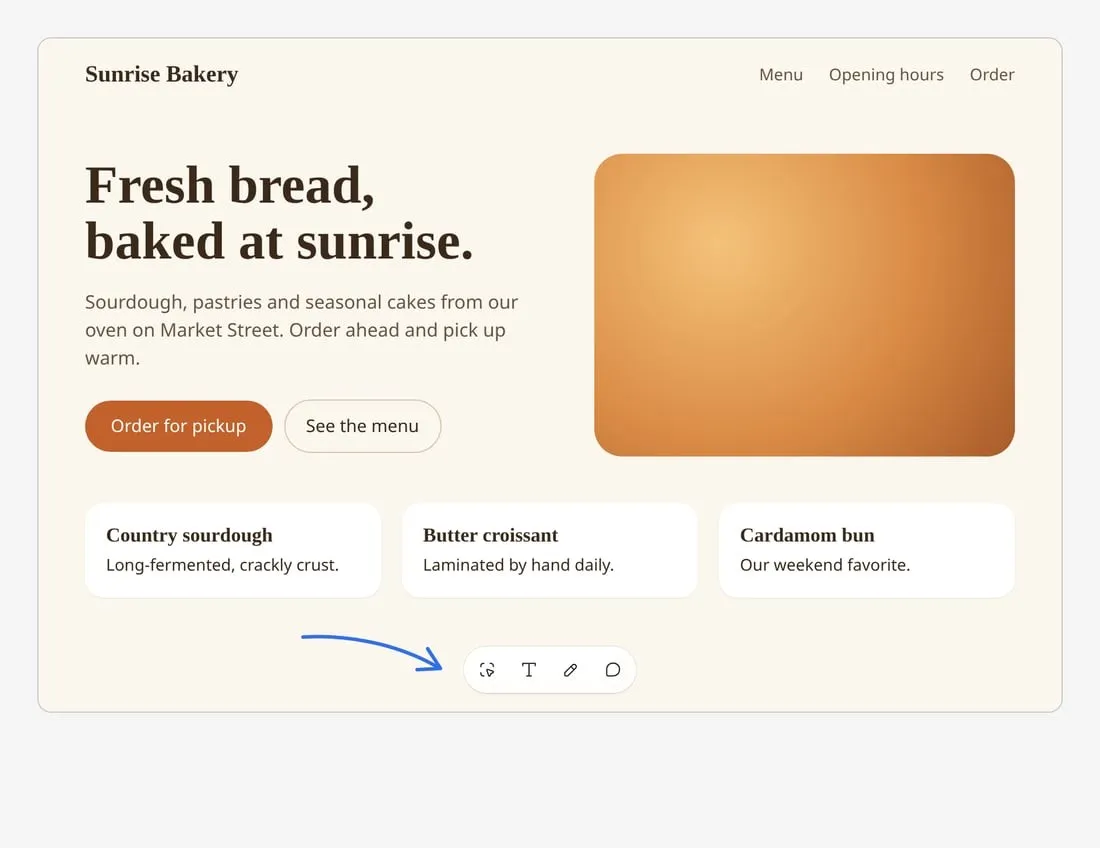
- Point-and-edit is the feature designers will use most. The preview toolbar, on every plan, lets you select elements and describe a change, edit text inline, draw annotations or leave comments. You get 100 free inline text edits, each available again 24 hours after use, while selecting elements and drawing annotations count as build usage.
- Design questions can steer the look. Lovable says it may ask design questions on your first message. Answering them instead of skipping is a cheap way to move away from default styling.
- Design systems are on every paid plan, not just Enterprise. They’re built around React component libraries, and each project connects to one design system. Design templates need Business, and npm-package design systems need Enterprise. Lovable lists styling wiring issues in new design-system projects as a known limitation.
- Figma import has three routes. Lovable’s Figma plugin needs at least a Dev seat in Figma, and the Figma MCP route needs the Lovable desktop app. A
.figupload brings in variables, colours, typography and frame structure. Lovable doesn’t state a way to send work back to Figma. - The code is yours. Git sync with GitHub, GitLab or Bitbucket works on every plan, though Lovable creates a new repository and can’t connect an existing one. A newer import tool, still rolling out, rebuilds projects from other builders’ ZIP exports. Paid plans add a ZIP download and in-app code editing. New apps use TanStack Start with server rendering, and there’s no framework choice.
- Web only. Lovable builds web apps and websites designed to work on mobile. There’s no native iOS or Android output; Lovable suggests a PWA or a wrapper such as Capacitor outside Lovable.
How good is the design output?
Reviewers praise Lovable’s speed more than they judge its visual polish, and credit use is the recurring complaint. Website Builder Expert (updated April 2026) found it intuitive and fast. On G2, users rate it 4.6 out of 5 from 503 reviews (checked 22 November 2026), praising how quickly an idea becomes a prototype.
The same G2 reviewers criticise unpredictable credit use, changes that break other parts of the app and debugging loops. Website Builder Expert adds that credits run out quickly, including on bug fixes, and that public apps need a developer’s review.
Our editorial view: like most AI builders, Lovable is likely to lean on familiar defaults unless you give it direction. Answer the design questions, name a specific style in your first prompt, or connect a design system. Then use the point-and-edit toolbar and inline text edits for the last details, instead of describing small visual changes in chat.
The real cost: how credits work
Lovable is easier to budget than token-based tools, but credits still go faster than people expect. We checked these prices on 22 November 2026; Lovable’s plans doc states them in USD.
- Free: 5 credits a day, up to 30 a month. Enough to build a landing page and see if you like it.
- Pro: from $25 a month for 100 credits, plus 5 daily credits with no monthly cap. Bigger tiers go from 200 credits ($50) up to 10,000 ($2,250). Unused monthly credits roll over while you’re subscribed and expire two months after issue on monthly plans. Top-ups cost $15 per 50 credits and last 12 months.
- Business: from $50 a month for the same 100 credits, plus SSO, design templates and team controls.
- Yearly billing gives two months free: Pro is $250 a year instead of $300.
Lovable publishes example costs, which helps. Making a button grey costs about 0.5 credits, removing a footer about 0.9 and adding authentication about 1.2. A landing page with generated images is 1.7 credits on the pricing page and 2 in the docs. Plan mode costs 1 credit per message, and each message’s exact cost appears under its More options menu.
When your balance hits zero, building stops, AI features in your published apps stop and apps on Lovable Cloud pause. Long Build runs also pause for a check-in at 20 credits by default.
Our advice: do visual tweaks with the point-and-edit toolbar and inline text edits, use Plan mode before any big change, and keep chat prompts for real features. On Pro, that makes 100 credits go a long way for prototypes.
Where it falls short
Lovable’s weak spots are the same as every AI builder’s: cost when things go wrong, and complex logic.
- Fixes cost credits even when they don’t work. Lovable’s Terms say credits are consumed even when output is faulty. Website Builder Expert and G2 users both report credits going on bug fixes and debugging loops.
- Generic by default. Skipping the design questions or design system is likely to leave you with familiar defaults.
- Complex apps still need a developer. Website Builder Expert says public apps need developer review. Lovable itself says its security scans don’t guarantee security and suggests a professional review for sensitive apps.
- Security history and data limits. In June 2025 Cybersecurity News reported CVE-2025-48757: weak row-level security in Lovable-built apps, with 303 vulnerable endpoints across 170 apps. Lovable isn’t HIPAA-compliant, and its standard Terms don’t allow health or payment card data in apps.
- The Free plan stops short of handover. There’s no code editing, ZIP download or custom domain until you pay.
- No model choice. Lovable picks the model for Build, Plan and Chat modes.
Lovable vs Bolt.new
Both start at $25 a month and both build full apps from a prompt. Lovable is the better pick if you’d rather refine visually by clicking, and it includes design systems on every paid plan. Bolt.new suits you if you want a code view next to the chat or native mobile apps through Expo, but using your own design system there needs the $30-per-member Teams plan. See our Bolt.new review and our Lovable vs Bolt comparison.
Should you use Lovable?
Yes, if you want to turn an idea into a working web app quickly, you’d rather refine designs by clicking than by coding, or your team wants one shared design system across many small apps.
Not yet, if you need a native mobile app, your app handles sensitive data or complex back-end logic, or you plan to iterate mainly by chat and can’t predict your credit spend.
How we reviewed Lovable
This review is based on research, not yet on our own hands-on test. In we checked Lovable’s pricing page, documentation and Terms, plus published reviews and user ratings. Prices and features come from Lovable’s own pages, and where those pages disagree we say so.
Statements about design quality and reliability summarise what independent reviewers and users report. The opinions are our editors’ judgement based on that research, not test results.
Next, we’ll build the same three projects we use for every vibe coding tool (a SaaS dashboard, a mobile onboarding flow and a landing page) and add our scores. See how we test.
Sources we checked
- Lovable pricing (opens in new tab), subscription plans (opens in new tab), credits and usage (opens in new tab) and credit top-ups (opens in new tab)
- Lovable docs: FAQ (opens in new tab), Git sync (opens in new tab), custom domains (opens in new tab), security (opens in new tab), Figma (opens in new tab), preview toolbar (opens in new tab), design systems (opens in new tab), chat (opens in new tab)
- Lovable Terms (opens in new tab)
- Lovable review (opens in new tab) (Website Builder Expert)
- Lovable on G2 (opens in new tab)
- Lovable security vulnerability (opens in new tab) (Cybersecurity News)
Lovable compared
Alternatives to Lovable
See all →



Frequently asked questions
Is Lovable free?
Yes. The Free plan gives you 5 credits a day, up to 30 a month, with private projects, unlimited members and Git sync. You can publish to a lovable.app address or to up to 10 invited people per project, but you can't edit or download the code, use a custom domain or remove the Lovable badge.
How much does Lovable cost?
Pro starts at $25 a month for 100 credits plus 5 daily credits, and bigger tiers go up to 10,000 credits a month. Business starts at $50 a month. Paying yearly gives two months free, so Pro costs $250 a year. We checked these prices on 22 November 2026.
How many credits does a change cost in Lovable?
It depends on the work. Lovable's own examples: making a button grey costs about 0.5 credits and adding authentication about 1.2. A landing page with generated images costs 1.7 credits on the pricing page and 2 in the docs, and a Plan mode message costs 1 credit.
Can Lovable import Figma designs?
Yes, in three ways. The Lovable Figma plugin needs at least a Dev seat in Figma, the Figma MCP route needs the Lovable desktop app, and a .fig upload brings in variables, colours, typography and frame structure.
Can I export my Lovable code?
Yes. Git sync with GitHub, GitLab or Bitbucket works on every plan, and paid plans can also download the code as a ZIP. Lovable says you own the code and can host it elsewhere.
Can Lovable build mobile apps?
Lovable builds web apps designed to work on mobile, but not native iOS or Android apps. It suggests a PWA, or wrapping the app's URL with a tool such as Capacitor outside Lovable.
Is Lovable or Bolt.new better for designers?
Lovable if you want design systems from the $25 Pro plan and prefer to refine by clicking on the page. Bolt.new if you want native mobile apps through Expo or a code view next to the chat; using your own design system in Bolt needs its $30-per-member Teams plan.